
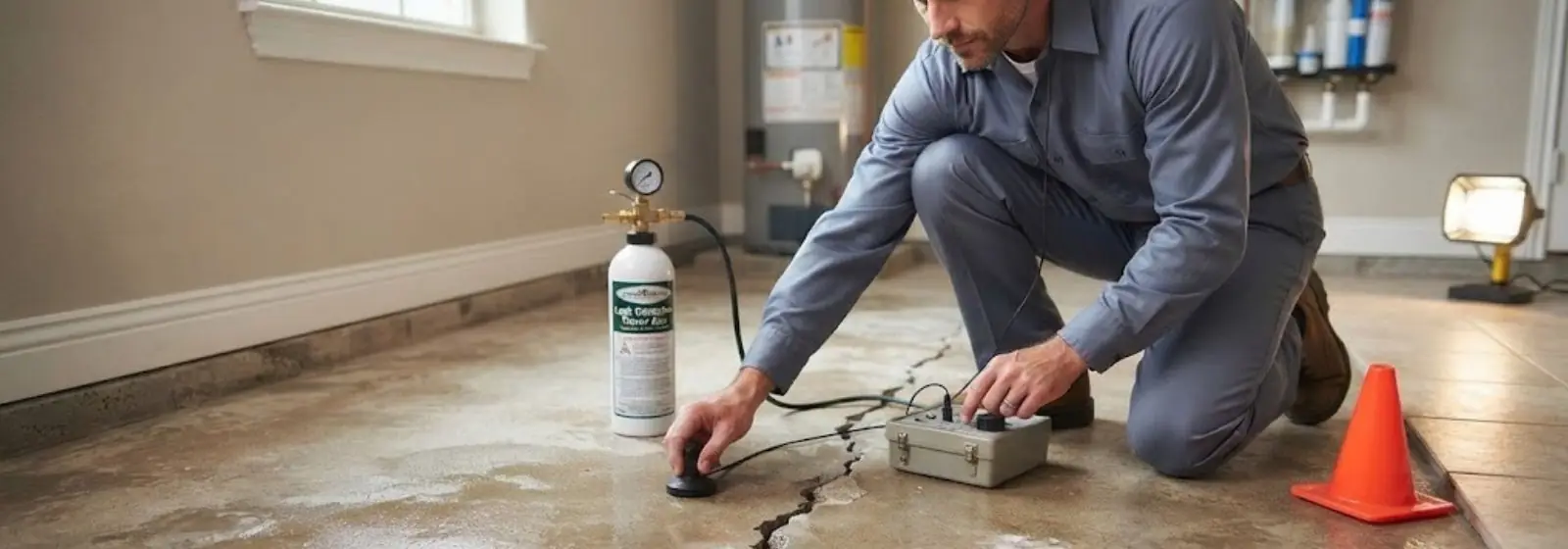
Emergency Slab Leak Repair in Suisun City, CA
Water under a concrete floor does damage quietly and keeps running day and night. Our 24/7 line is open, so call as soon as you notice a warm floor spot, a hiss from the slab or a meter that will not stop.
Why a Slab Leak Hides for So Long
Many homes sit on a concrete foundation with supply lines, and sometimes drain lines, running through or beneath it. When one of those pipes fails, the water has nowhere obvious to go, so it soaks the soil, lifts flooring or simply drains away.
That is why the first signs are often indirect. A water bill that climbs, a floor that feels warm in one spot or the faint sound of running water at night are all typical. By the time a wet patch appears, the leak has often been active for a while.
What a Leaking Slab Tells You
Slab leaks tend to show up as a handful of recognizable clues.
A hot spot on the floor
A leaking hot water line warms the concrete above it. A patch that feels like a heating pad under your feet is a strong hint.
The meter moves with everything off
Close every fixture and watch the dial. If it spins, water is escaping somewhere in the house or the buried supply line.
Damp flooring or lifted tile
Carpet that feels wet from underneath, laminate that buckles and tile that cracks can all signal water pushing up from below.
Low pressure or a hiss
Weaker flow at the taps and a faint running sound from the floor at night often accompany a pressurized leak.
Floor Wet or Warm? Do This First
A slab leak is rarely a flood, but a few steps keep it from getting worse before help arrives.
Shut the main valve
Turn it clockwise until it stops. If the meter stops moving after that, the leak is inside the house side of the system.
Turn off the water heater
Cut power to an electric unit or set a gas unit to pilot. A hot line leak can drain the tank and leave it heating an empty shell.
Lift what you can
Move rugs, boxes and low furniture off the wet area. Keep towels out of floor vents, where water can wick into ductwork.
Note what you see
A photo of the wet area, the warm spot and the meter dial helps the technician decide where to listen first.
Do not drill or break concrete to look for the pipe. Cutting in the wrong spot can hit a second line and make repairs harder.
Call the 24/7 lineSoft Marsh Ground and What It Means for Buried Pipe
Suisun City sits beside Suisun Marsh, and local history says the town was built on marshy land. The railroad roadbed across the marsh settled 6 to 12 inches a year for decades until fill and drainage steadied it. Soil like that can keep moving at a small scale, and ground movement stresses the pipe that runs through or beneath a slab.
That does not mean any particular home has a problem. It does mean that if the pipe under your floor is old and your floor has settled or cracked, a leak there is a reasonable thing to rule out. A leak detection visit can confirm it before any concrete is touched.
Hear water running when nothing is on?
Describe the sound and where it is loudest when you call. It saves time on site.
Three Ways to Fix a Leak Under the Floor
Once the leak is pinpointed, the repair method depends on pipe condition, location and how many lines are involved.
| Method | What happens | Best fit |
|---|---|---|
| Spot repair through the slab | A small section of concrete is cut open, the bad pipe is replaced and the slab is patched | One clear leak in an otherwise sound line |
| Reroute through walls or attic | The failed line is abandoned and a new line is run overhead or in the walls | A bad section that is hard to reach or keeps failing |
| Repipe the affected lines | New supply piping replaces old pipe throughout the house | Several leaks or aging pipe across the home |
Which option is right depends on what the locating work finds. You hear a clear price before work starts.
When One Repair Is Enough and When It Is Not
A single leak in a line that is otherwise in good shape is a fair candidate for a spot repair. The pipe is exposed, the damaged section is cut out and replaced, and the concrete is closed up. Under the California Plumbing Code, which is built on the Uniform Plumbing Code (UPC), the replacement pipe and its joints must be approved for use under a slab.
Signs the pipe itself is the problem
If the opened section looks pitted, crusty or thin, the neighboring pipe is probably similar. A second leak a year later is common when the whole run has aged out.
Why rerouting is often the quieter choice
Running a new line through the attic or walls avoids breaking more floor. It is usually the plan when the old line runs under tile, cabinets or fixtures that you would rather not disturb.
For a house with repeated leaks, a whole-house repipe can end the cycle of patching. It is a larger job, but it replaces the unknowns with new pipe.
What Not to Try on a Slab Leak
Slab leaks attract some risky shortcuts. Here is how they compare with a planned repair.
Common shortcuts
- Breaking concrete to hunt for the pipe
- Pouring sealants into the supply line
- Leaving the leak and just paying the bill
- Hiding damp flooring under new carpet
- Patching a drywall stain without finding the source
A planned repair
- Pinpoint the leak before cutting
- Pressure test each line to isolate the failure
- Choose spot repair, reroute or repipe on evidence
- Dry out the structure after the repair
- Explain the price before work starts
What Affects the Cost of a Slab Leak Repair
Each job comes down to a few variables. Knowing them helps you compare options.
Call the 24/7 line for your real number. The price is explained before any work starts.
Getting Ready for the Repair Visit
Clear a path to the wet area and, if possible, to the water heater and main valve. A technician needs to listen and test without moving boxes, so the more open the floor, the faster the search goes.
If the house is rented, tell the owner or property manager as soon as you know. Many leases require prompt notice, and a written record of when the problem started is useful. For nearby towns, the same team covers Fairfield and Vacaville.
Slab leak questions from local homeowners
Yes. The line is open 24/7, and same-day appointments are available when the schedule allows. Shut the main valve while you wait if water is on the floor.
A warm patch on the floor, a meter that keeps moving with the main valve closed inside the house and a sound from the floor point to the slab. A technician confirms it with listening gear and a pressure test, as described on the leak detection page.
Not usually. Locating the leak first keeps any opening small. Rerouting through the attic or walls can avoid breaking the slab at all.
It can contribute. Suisun City was built on marshy land, and ground movement can stress buried pipe. It is one possible factor alongside pipe age and water chemistry, not a diagnosis of any one house.
Tap water here measured 170 ppm in the City's 2025 report, which is hard on the USGS scale. Scale can crust fittings and shorten the life of some pipe over time. A softener helps reduce it going forward.
Coverage varies by policy, so ask your insurer before work starts. A written account of what was found and fixed is useful whatever they decide.
Look up any plumber's license on the California Contractors State License Board website at cslb.ca.gov. CSLB warns that a number printed on an ad may not be valid, so always check the status yourself.