
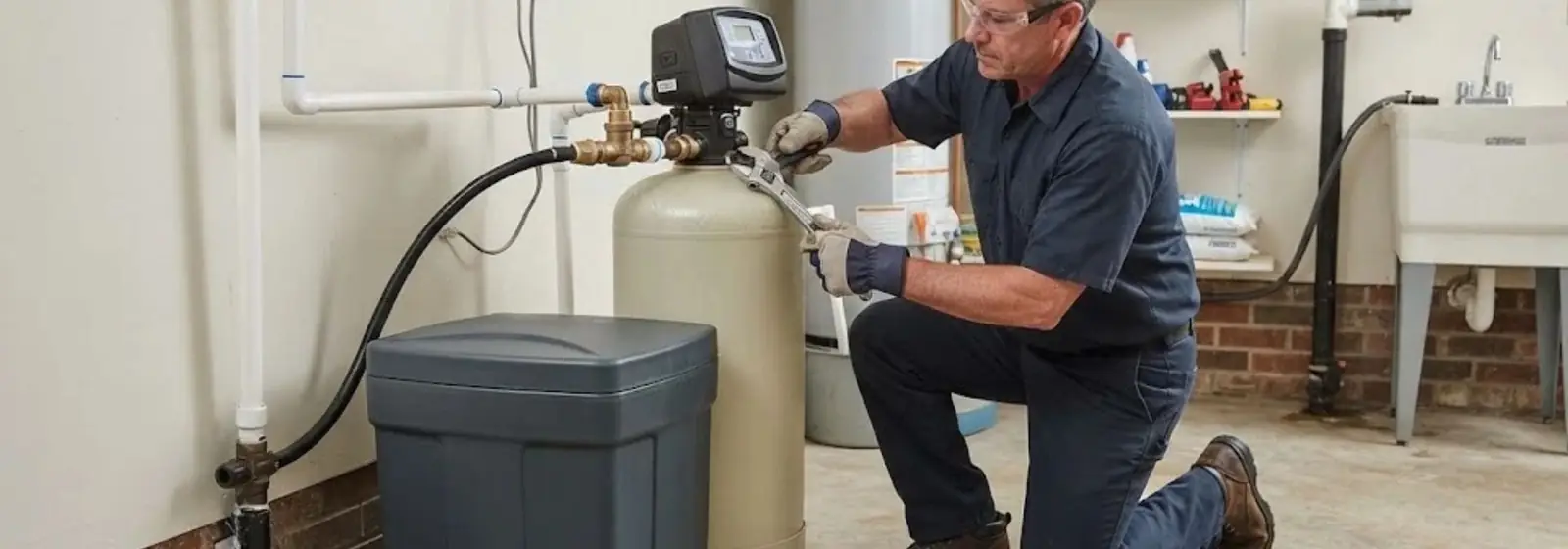
Water Softener & Filtration in Suisun City, CA
Suisun City tap water measured 170 ppm hardness in the City's 2025 report, about 9.9 grains per gallon. That is the white crust on your faucets, and it is also what shortens the life of your water heater.
What 170 ppm Means in Your Kitchen and Bathroom
Hardness is a measure of dissolved calcium and magnesium. Dividing 170 ppm by 17.1 gives about 9.9 grains per gallon, which is the unit softener makers use for sizing.
On the common USGS scale, 121 to 180 ppm is hard and anything above 180 is very hard. Suisun City water sits in the hard band, near the top of it, so the effects are easy to see.
The same report lists total dissolved solids at 220 ppm. Hardness is only part of that number, and it is the part that leaves scale on pipes, glass and heating elements.
Suisun City tap water: about 9.9 grains per gallon, in the hard band on the USGS scale
Signs of Hard Water Around the House
Most homeowners notice the symptoms long before they connect them to the water.
White crust on fixtures
Chalky buildup around faucet spouts and showerheads is dried calcium. It returns a few days after cleaning.
Spots on glasses and dishes
Cloudy film and spotting after the dishwasher runs is hard water drying on the surface.
Dry skin and stiff laundry
Soap reacts with minerals and leaves a film. Towels feel rough and soap does not lather easily.
Noisy, slow water heater
Scale on elements and sediment on the tank floor shrink hot water supply and shorten the heater's life.
Softener, Conditioner and Carbon Filter: What Each One Does
These systems solve different problems, and many homes use more than one.
| System | What it does | What it does not do |
|---|---|---|
| Salt-based softener | Removes calcium and magnesium through ion exchange | Does not remove chlorine or taste |
| No-salt conditioner | Changes how scale forms so it clings less | Does not remove the hardness minerals |
| Carbon filter | Reduces chlorine taste and odor | Does not soften the water |
| Under-sink filter | Treats drinking water at one tap | Does not protect the heater or showers |
Tell the plumber what bothers you most and the choice becomes simpler.
Which system fits your house?
Describe the symptoms on the call and a licensed plumber will talk through the options.
Sizing a Softener for Your Household
A softener is sized by how many grains of hardness it must remove between regenerations. Take the number of people in the house, multiply by typical daily water use and then by the 9.9 grains per gallon in the City's water.
A unit that is too small regenerates constantly and wastes salt. One that is too large can sit too long between cycles and cause stale water in the resin.
Bring up bathrooms, laundry habits and any irrigation you want kept off the softener. The plumber uses those details to pick a size that matches how your household really uses water. To talk it through, contact the dispatch team.
Taste and Chlorine Are a Separate Question
The City's treated water is disinfected with chlorine. Some people notice a chlorine taste or smell, and a softener does not touch that.
A carbon filter at the kitchen tap or at the point where the water enters the house handles taste and odor. If your complaint is flavor rather than scale, that is the simpler and lower-cost route to ask about first.
Households that want both scale control and better-tasting water often pair a softener with a carbon stage. The plumber can lay out which pieces go where. Other fixture and pipe work is listed on the services page.
Keeping a Softener Working Year After Year
A softener needs very little attention, but a few habits keep it effective.
- Check the salt. Look in the brine tank every month or two and top it up before it runs low.
- Break up salt bridges. A hard crust can form above the water line and stop the brine from forming. Tap it loose with a broom handle.
- Test the hardness. A simple test strip on a softened tap tells you if the unit is still doing its job.
- Schedule a service visit. Resin beds wear out over many years. A visit now and then catches problems early.
If hard water has already left scale in the tank, a flush at the same visit helps clear it. The water heater repair page describes that work.
Where Suisun City's Water Comes From
The Suisun-Solano Water Authority supplies the city with surface water from Lake Berryessa, delivered by the Putah South Canal. It is treated at the Cement Hill Water Treatment Plant and disinfected with chlorine.
The City's 2025 water quality report records hardness of 170 ppm from a March 2025 sample. The 2020 report listed 160 ppm, so the level has stayed in the same hard band, and a softener sized for it will keep working.
Neighbors differ. Fairfield's 2022 report averaged 162 ppm with a range of 72 to 229 ppm, so a softener sized for a home in Fairfield may not match one here. In Vacaville, the city's wells ranged from 76 to 300 ppm, which means your street's water can be softer or harder than the town average.
Source: City of Suisun City 2025 Water Quality Report.
What Affects the Price of Water Treatment
You hear a clear price before work starts. These are the pieces that set it.
Call the 24/7 line for your real number.
Pairing Treatment With a New Water Heater
The best time to add a softener is when a water heater is being replaced, because the plumber already has the lines open. A softened supply protects a new tank or tankless unit from scale from the first day.
If you are planning a swap, the water heater replacement page explains the process. For a wall-hung option that is especially sensitive to scale, see the tankless water heater page.
Permit rules vary, so ask the Suisun City Building Division whether the work needs one and check current counter hours. Plumbers on this line are licensed and insured, and you can check any contractor's license at cslb.ca.gov. The California Plumbing Code, built on the Uniform Plumbing Code (UPC), covers how a softener's drain line connects to the waste system, which is why that connection is done by a licensed plumber and not left to a loose hose.
Water Softener and Filtration Questions
The City's 2025 water quality report lists hardness at 170 ppm, about 9.9 grains per gallon. On the common USGS scale that is in the hard band, near the top of it.
Yes. Softened water leaves far less scale on elements and tank floors, so the heater lasts longer and holds its capacity. A yearly flush is still a good habit.
No. A softener removes hardness minerals. A carbon filter reduces chlorine taste and odor, and some homes install both.
They work differently. A no-salt conditioner changes how scale forms but does not remove the minerals. A salt-based softener removes them. The plumber can explain which fits your goals.
In most cases, yes. It usually needs a spot near the main water line, a drain connection and an outlet. Call the 24/7 line and describe your layout.
Permit rules vary. Ask the Suisun City Building Division whether your job needs one and check current counter hours. The plumber can explain what the work involves.