
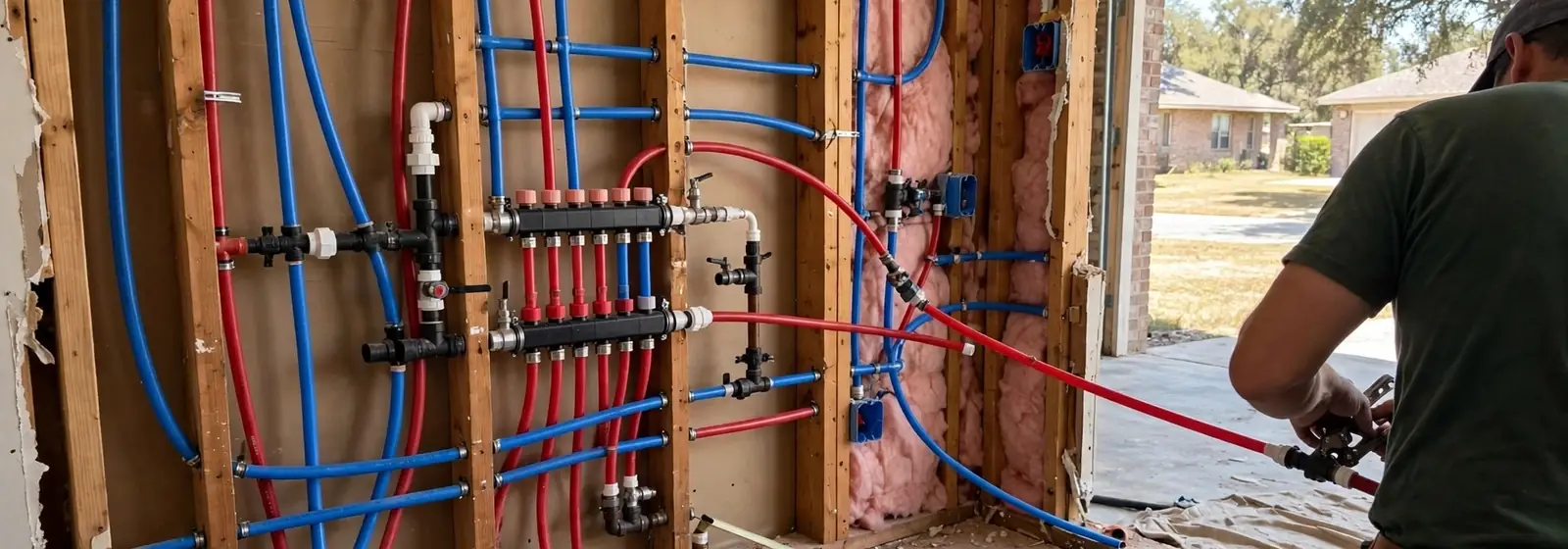
Whole-House Repiping in Suisun City, CA
Repiping replaces the supply pipes that carry water through your house, and it is a planned project rather than a panic call. Our line is open 24/7 if you want to talk through whether it is time.
How to Tell Whether Your House Is Ready for New Pipe
Pipes do not announce their end of life, but they leave clues. Repeated leaks in different spots, rust-colored water when you first open a tap and pressure that has slowly faded all point to wear throughout the system rather than one weak joint.
Pinholes are a common sign in copper, and flaking, rust and narrowing are common in galvanized steel. If you have had two or three repairs in a short time, a conversation about repiping is worth having. The California Plumbing Code, built on the Uniform Plumbing Code (UPC), limits which supply materials may be used and calls for working shutoff valves and sound pressure control, so new pipe is chosen with those in mind.
Patterns That Usually Mean Repiping
No single sign settles it, but these patterns carry weight.
More than one leak in a year
A second and third failure in different places suggests the pipe is aging out. Fixing each one separately adds up.
Rust or brown water
Discolored water that clears after a minute usually comes from corroding pipe, especially in older galvanized lines.
Low flow in multiple fixtures
When every shower and tap has weaker flow, interior buildup may have narrowed the pipe.
Bluish-green stains or pinholes
Greenish residue at fittings and tiny sprays from copper walls signal corrosion that tends to continue.
Want to talk it through before deciding?
Call the 24/7 line and describe the leaks or symptoms. A plumber can tell you whether a repair or a repipe fits.
Why Older Housing Stock Matters Here
Suisun City grew from 2,917 residents in 1970 to 22,686 in 1990, roughly eightfold. That means much of the housing stock dates from the late 1970s through the 1990s, and the original supply pipe in those homes is now decades old. Old Town has older buildings still.
Age alone does not condemn a pipe. But decades of use, combined with the water chemistry described below, make a repipe a sensible thing to price out if leaks begin to repeat. A leak detection visit can help sort a single fault from a systemic one.
Hard Water and the Pipes You Install Next
The City's 2025 water quality report measured Suisun City tap water at 170 ppm hardness, about 9.9 grains per gallon. On the common USGS scale, that is hard water and close to the top of that band.
Scale clings to the inside of metal pipe, to fixtures and to water heaters, and it can shorten the life of fittings. New pipe starts clean, but untreated hard water will still leave deposits at heaters and faucets. A water softener installed alongside a repipe protects the new system.
Suisun City tap water measured 170 ppm hardness in March 2025.
What a Whole-House Repipe Involves
The job follows a clear sequence, which can usually be done without moving out of the home.
Plan the routes
The plumber looks at the layout, the fixtures and the access points, then decides where new lines will run through walls, attic or crawlspace.
Open small access points
Drywall is cut only where needed to run pipe. Many routes use existing cavities, which keeps wall openings limited.
Run and connect the new pipe
New supply lines go in from the main to each fixture, and connections are made at the water heater, toilets and sinks.
Pressure test, then patch
The new system is pressure tested before anything is closed. After a pass, the openings are patched and ready for paint.
Pipe Materials Compared
Three materials do most residential supply work today. Each has strengths, and the best choice depends on the house.
| Material | Strengths | Trade-offs |
|---|---|---|
| PEX | Flexible, quick to run through walls, resists scale buildup in the bore | Not for outdoor sun exposure, needs correct fittings |
| Copper | Long track record, holds up to heat, widely accepted | Costs more up front, can pit in some water conditions |
| CPVC | Lower material cost, resists corrosion | Becomes brittle with age, less forgiving of rough handling |
Your plumber explains which material fits your house, water and budget before work starts.
Repair a Few Leaks or Replace the Whole System
Neither choice is always right. This is how the two paths usually compare.
Keep repairing
- Pipe is in decent shape apart from one failure
- Leaks have been isolated, not repeating
- Water quality and pressure are normal
- Budget is limited right now
- House may be sold soon
Plan a repipe
- Leaks keep appearing in different places
- Water is discolored or pressure is poor
- Pipe material is known to fail with age
- Walls will be open for a remodel anyway
- You want to stop worrying about the next leak
Many owners start with a repair and then schedule a repipe if another leak follows.
What Affects the Price of a Repipe
The cost comes from a handful of factors that vary house to house.
A clear price is explained before work starts. Call the 24/7 line for your real number.
Getting Your Household Through a Repipe
Plan for the water to be off for part of each working day. Fill a few containers beforehand, and set up a spot for drinking water and basic cleanup.
Let the plumber know about pets, home offices and anyone with medical needs. The same team serves Fairfield and Vacaville, and it can talk through scheduling by phone.
Repiping questions from homeowners nearby
Repeated leaks, rust-colored water, pinholes and falling pressure all point that way. A single leak does not. Describe your symptoms on the 24/7 line and a plumber can advise.
Not the whole time. Water is typically off for part of each working day, and a plan is set up in advance so you know when to expect it.
Permit rules vary, so ask the Suisun City Building Division (707-421-7317) whether your job needs one and check current counter hours.
At 170 ppm, local water is hard. PEX resists scale inside the pipe, though deposits still collect at heaters and faucets. A softener helps protect any material.
Older pipe is more likely to fail, and much of the housing stock here dates from the late 1970s through the 1990s. That is a general trend, not a statement about any one house.
Yes, if the rest of the pipe is in good shape. When failures keep appearing, replacing the whole system often costs less than repeated repairs. Our burst pipe repair page covers individual breaks.
Use the CSLB License Check tool at cslb.ca.gov or call (800) 321-2752. A number printed on an ad may not be valid, so check the status first.